What looks like a field is often just a few colonies
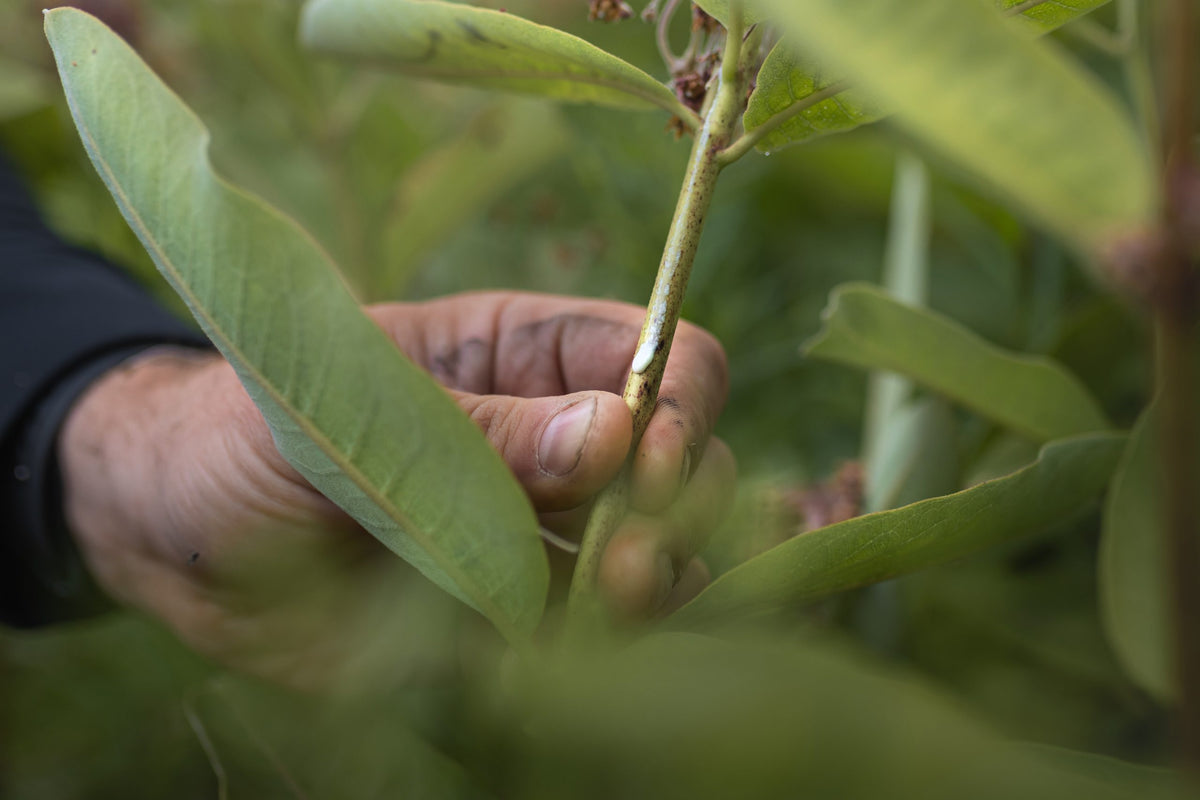
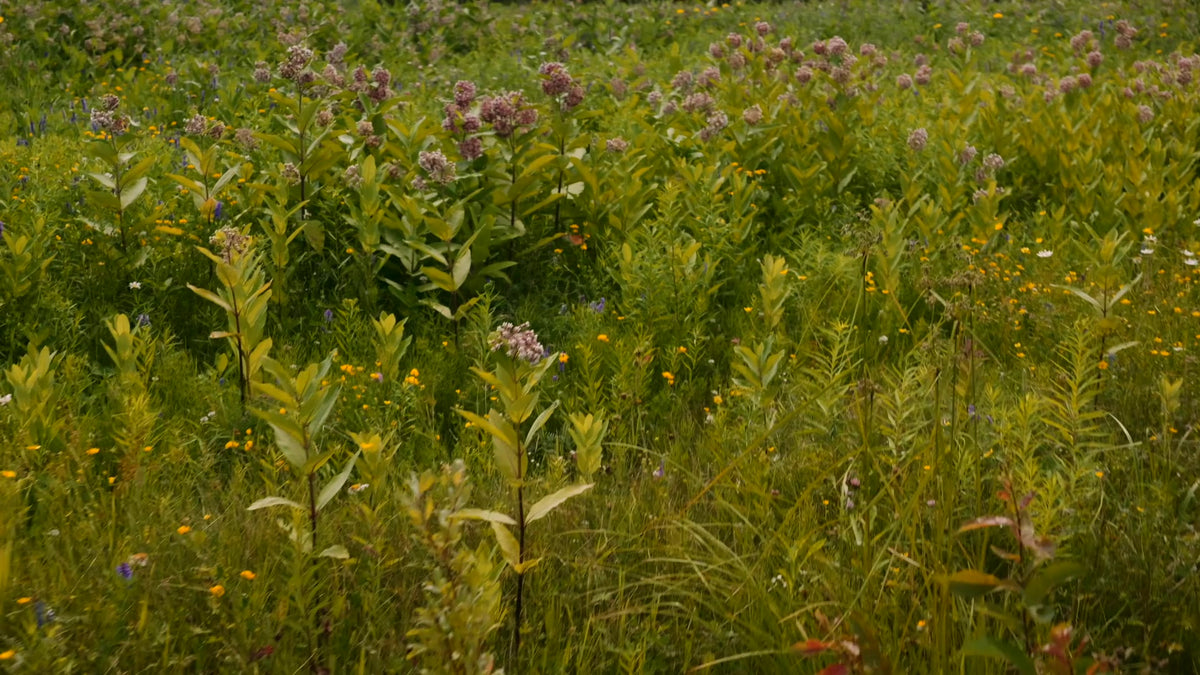
Common milkweed spreads through rhizomes, underground stems that link the plants together. A single colony can have dozens of stems.

A milkweed field in full bloom, its monarchs, its caterpillars and the people who grow it. Scroll through the tour at your own pace.


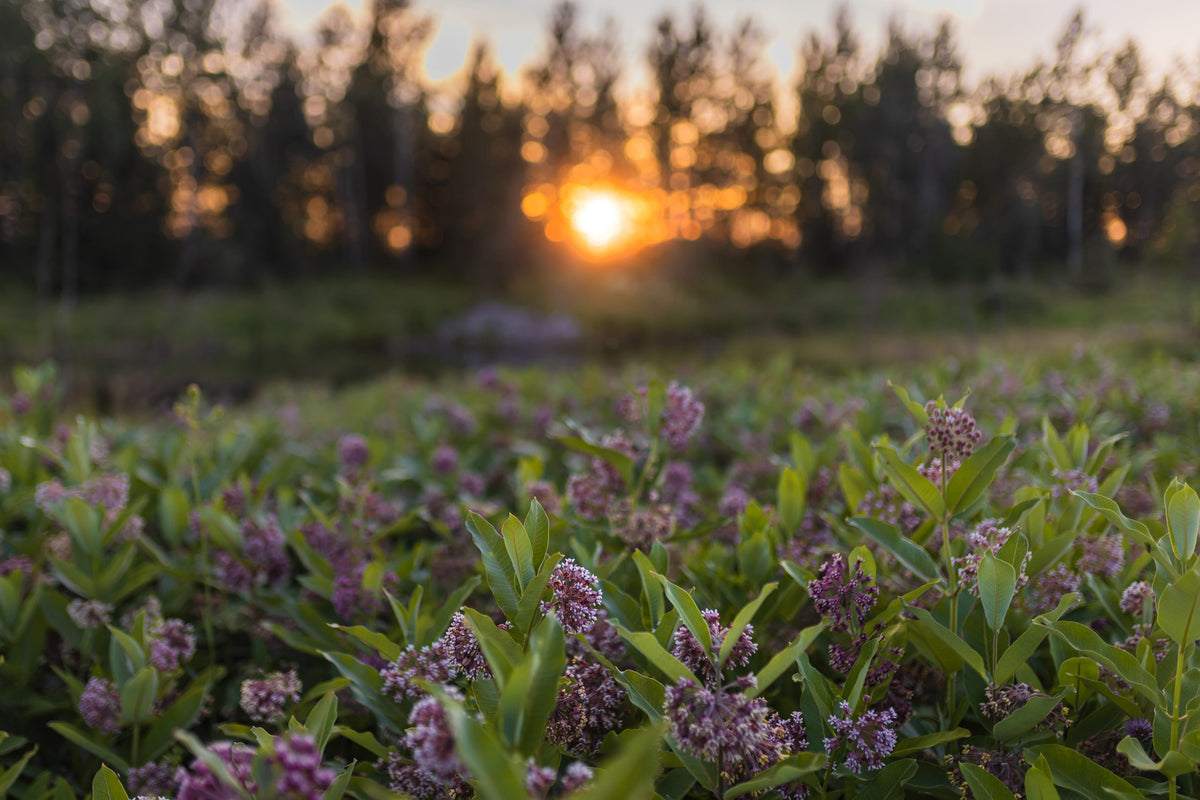
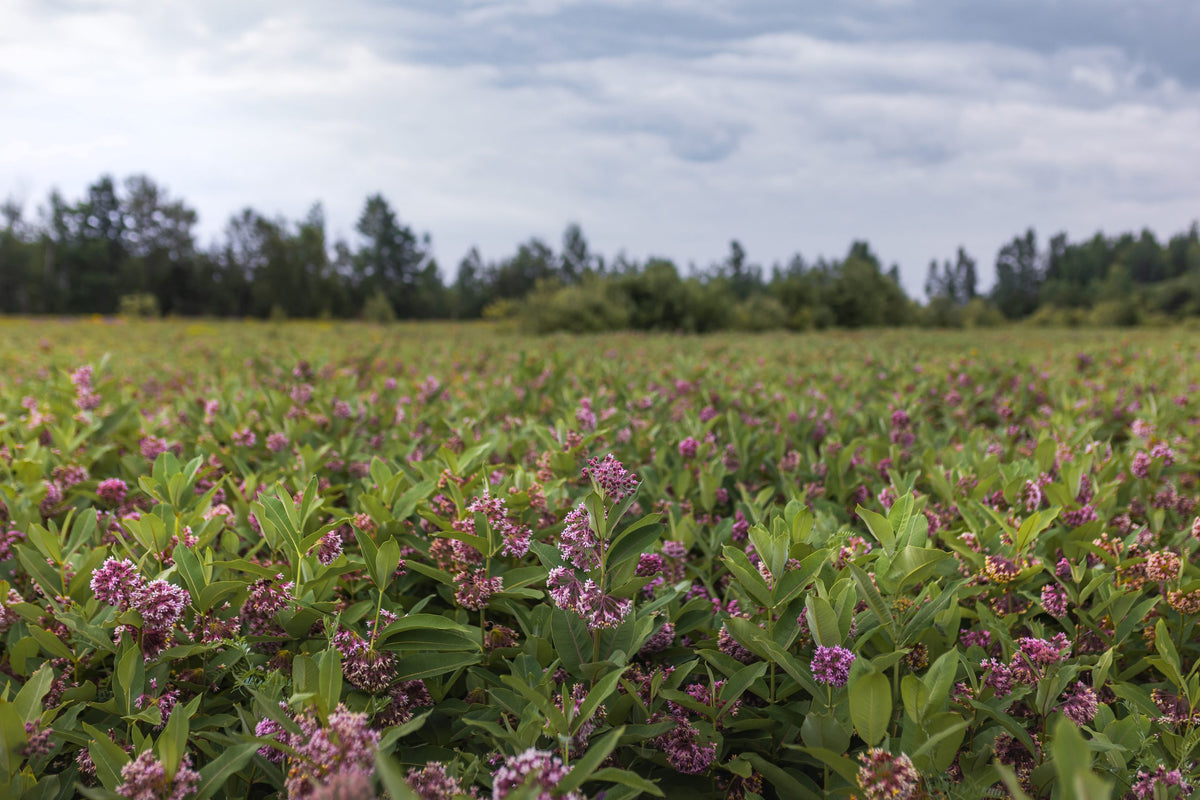
In July, milkweed covers the field from end to end.
Common milkweed spreads through rhizomes, underground stems that link the plants together. A single colony can have dozens of stems.
Milkweed comes back every spring without reseeding. Native to North America, it generally grows with few inputs, and its roots stay in place from one year to the next.
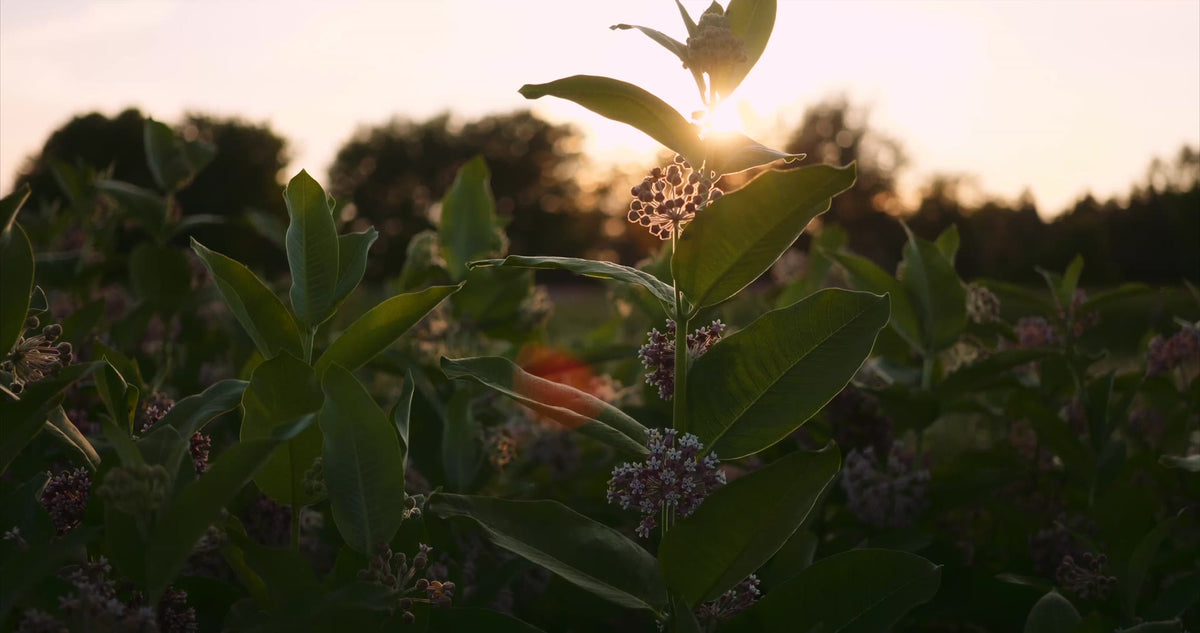
During bloom, the whole field is fragrant. The sweet scent of the flowers carries far: it is often what you notice before you see the field.
Tap the dots to take a closer look at what happens in a milkweed field.


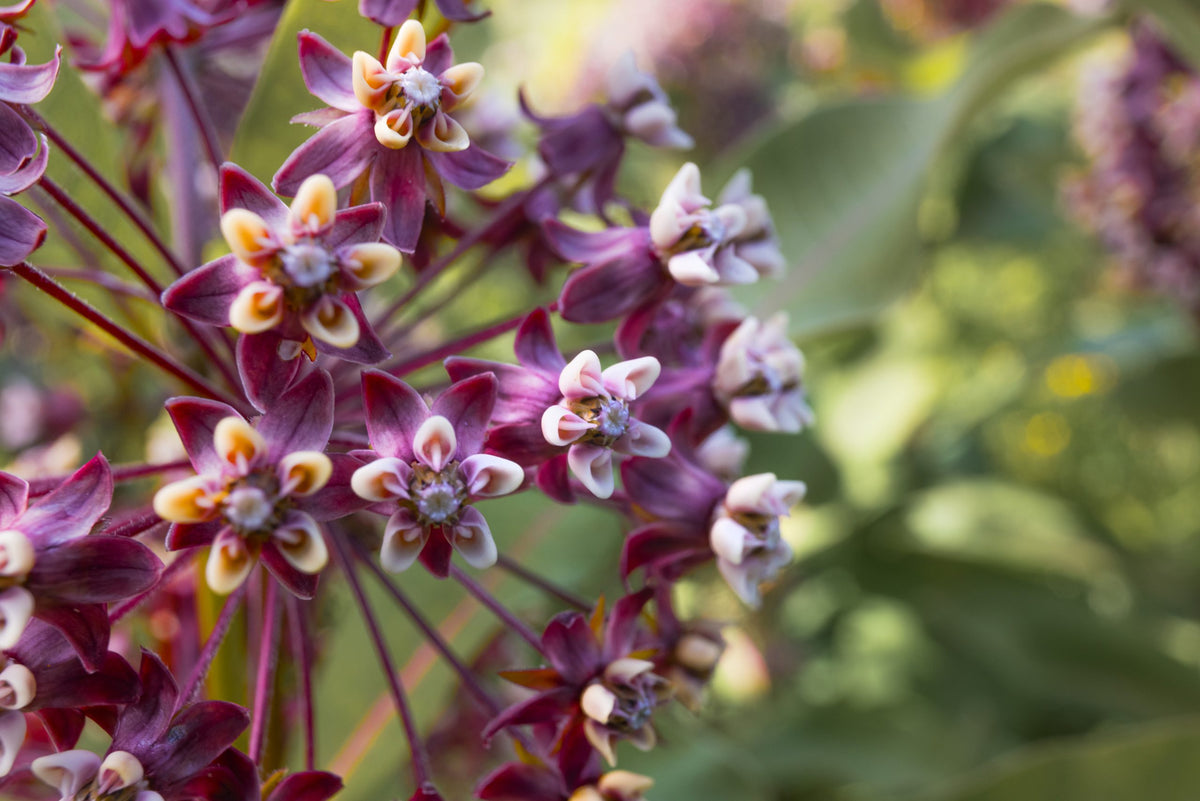
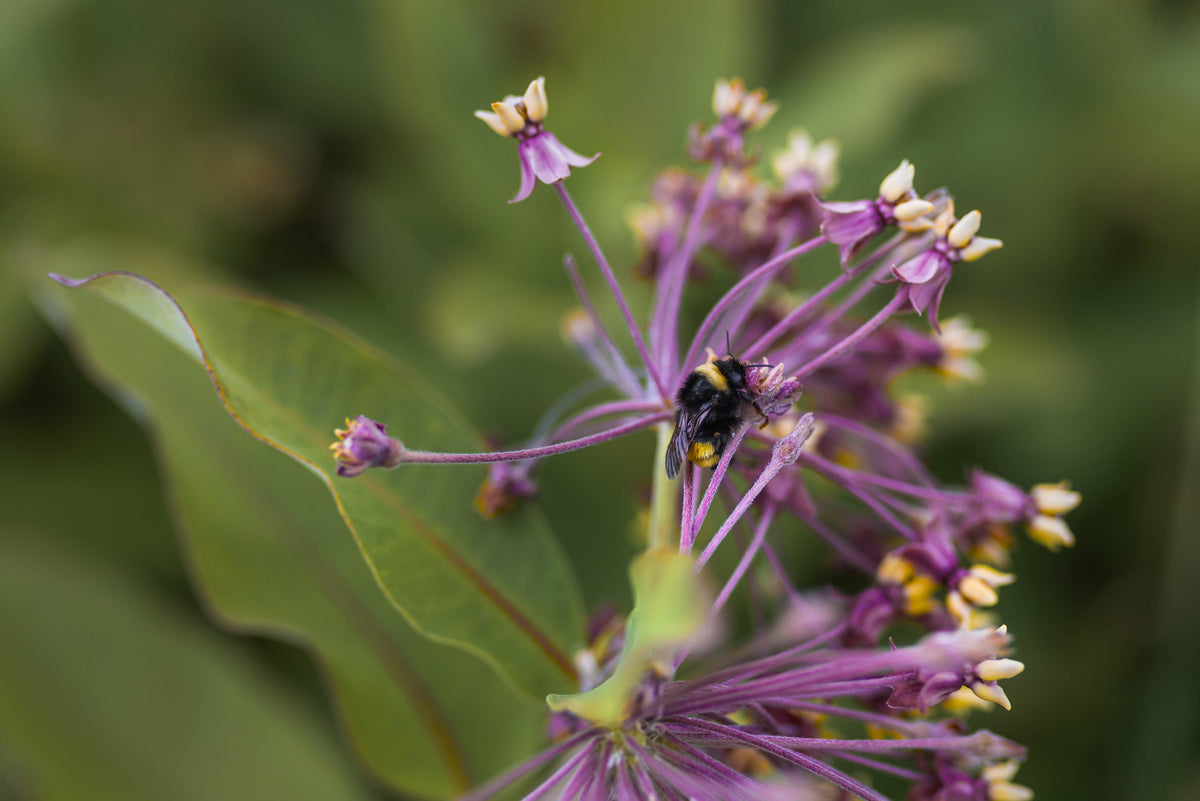
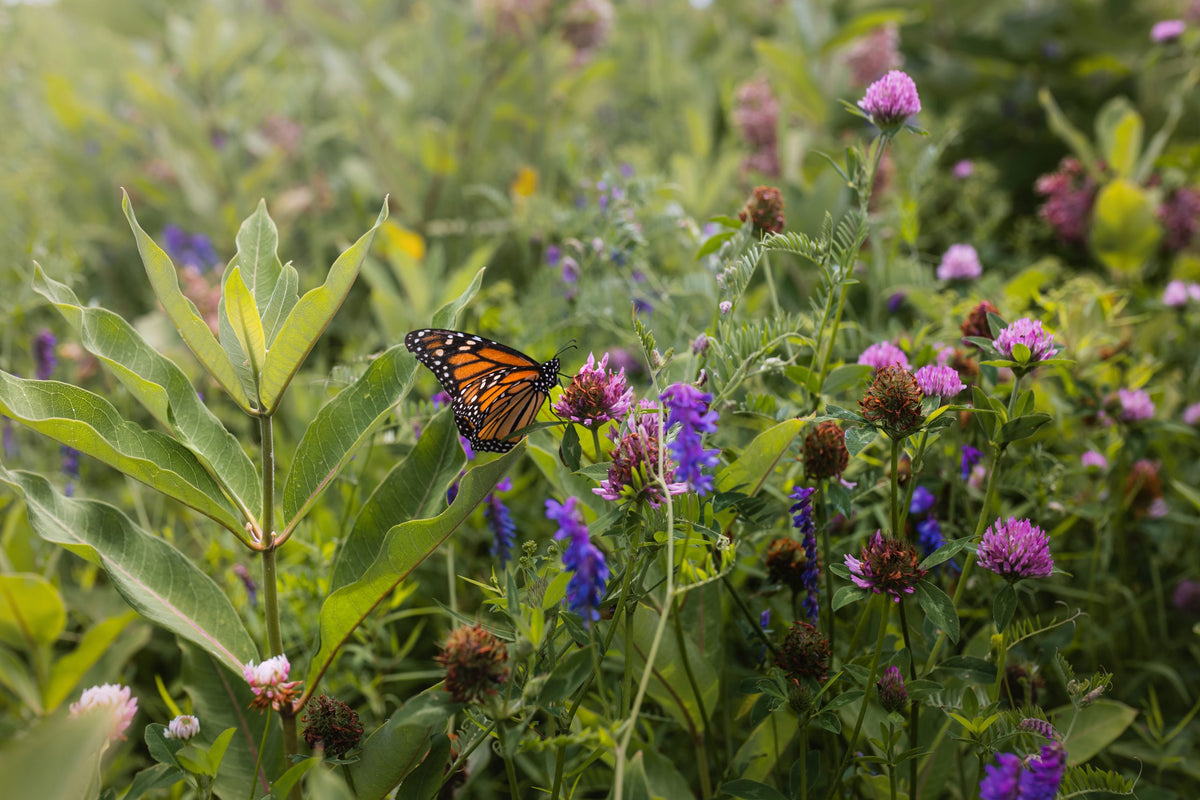
Rich in nectar, milkweed flowers attract bees, bumblebees, butterflies and beetles. In the evening, moths take over.
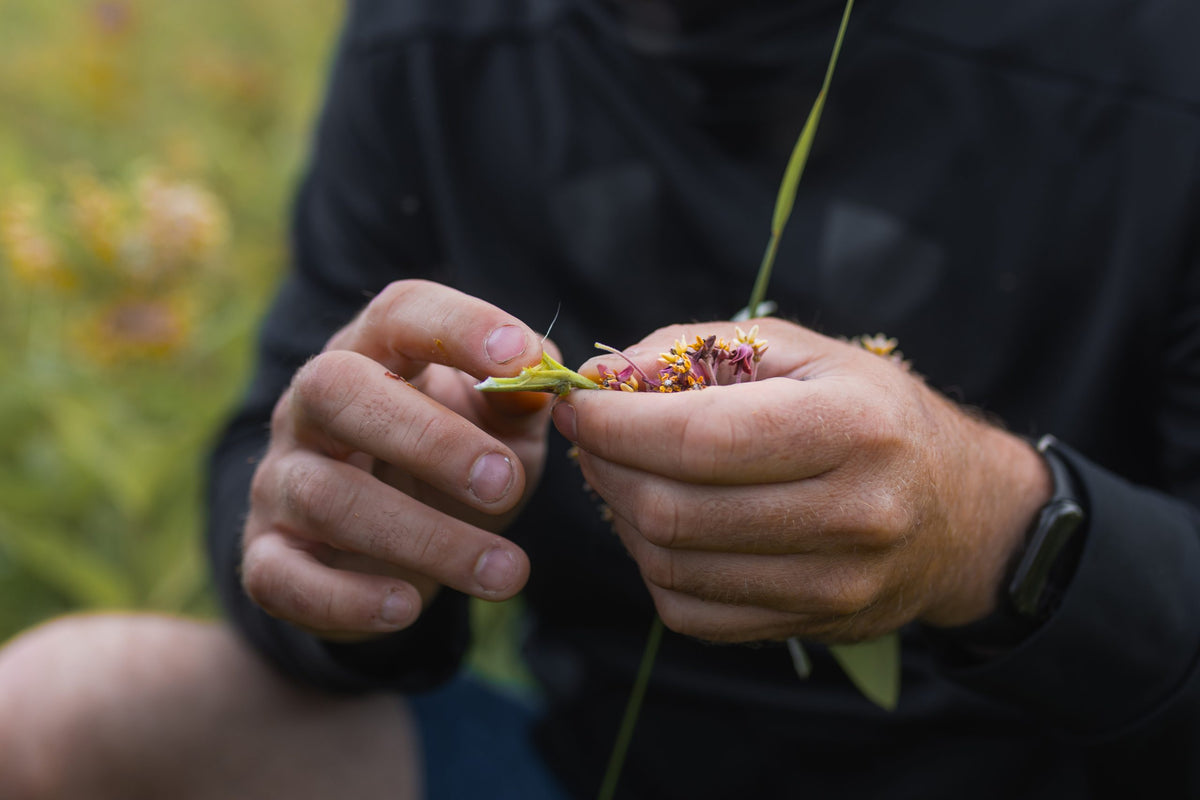
Milkweed pollen is not a powder: it is packed into small sacs, called pollinia, that catch on insects’ legs and travel from flower to flower. A rare mechanism among plants.
The monarch is the best known, but a wide variety of insects live on milkweed or feed from it: bumblebees, wild bees, beetles, specialized bugs.

The sun slips behind the forest. The bees head home, the moths arrive: the field never quite sleeps.


Monarch caterpillars eat only milkweed. Without it, there is no new generation of butterflies.
The female lays her eggs one by one, mostly under young leaves. Over her life she can lay several hundred, spread across many plants.
Monarchs born in late summer in eastern Canada undertake a migration of several thousand kilometres to the mountain forests of central Mexico, where they spend the winter.
In Canada, the monarch is listed as an endangered species. The loss of milkweed from farm landscapes is among the main causes of its decline. That is why Lasclay exists: to give this plant a value that makes people want to grow it.
Slide to follow the transformation, photographed in this field in July.
At hatching, the caterpillar is barely a few millimetres long. It first eats its own eggshell, then starts on the milkweed leaf where it was born.
It eats almost non-stop and sheds its skin five times. The milkweed compounds it stores make it unappetizing to birds, and its stripes tell them so.
Hanging under a leaf, the caterpillar sheds its skin one last time. You can still see it at the top, all crumpled: underneath, the jade-green chrysalis has already formed.
Inside the chrysalis, the caterpillar’s body transforms completely. The orange and black wings become visible through the casing just before emergence.
The butterfly emerges, spreads its wings and lets them dry for a few hours before its first flight. It will feed on nectar, and sooner or later a female will come back to lay eggs on milkweed.

In a field in July, you often just need to lean in to find one.


For decades, farming treated milkweed as a weed. Growing it means relearning: sowing, tending, harvesting the pods in the fall.
No growers, no material. Without buyers, they cannot carry the risk of this crop alone. Buying milkweed from the people who grow it, year after year, is what keeps the fields in place.


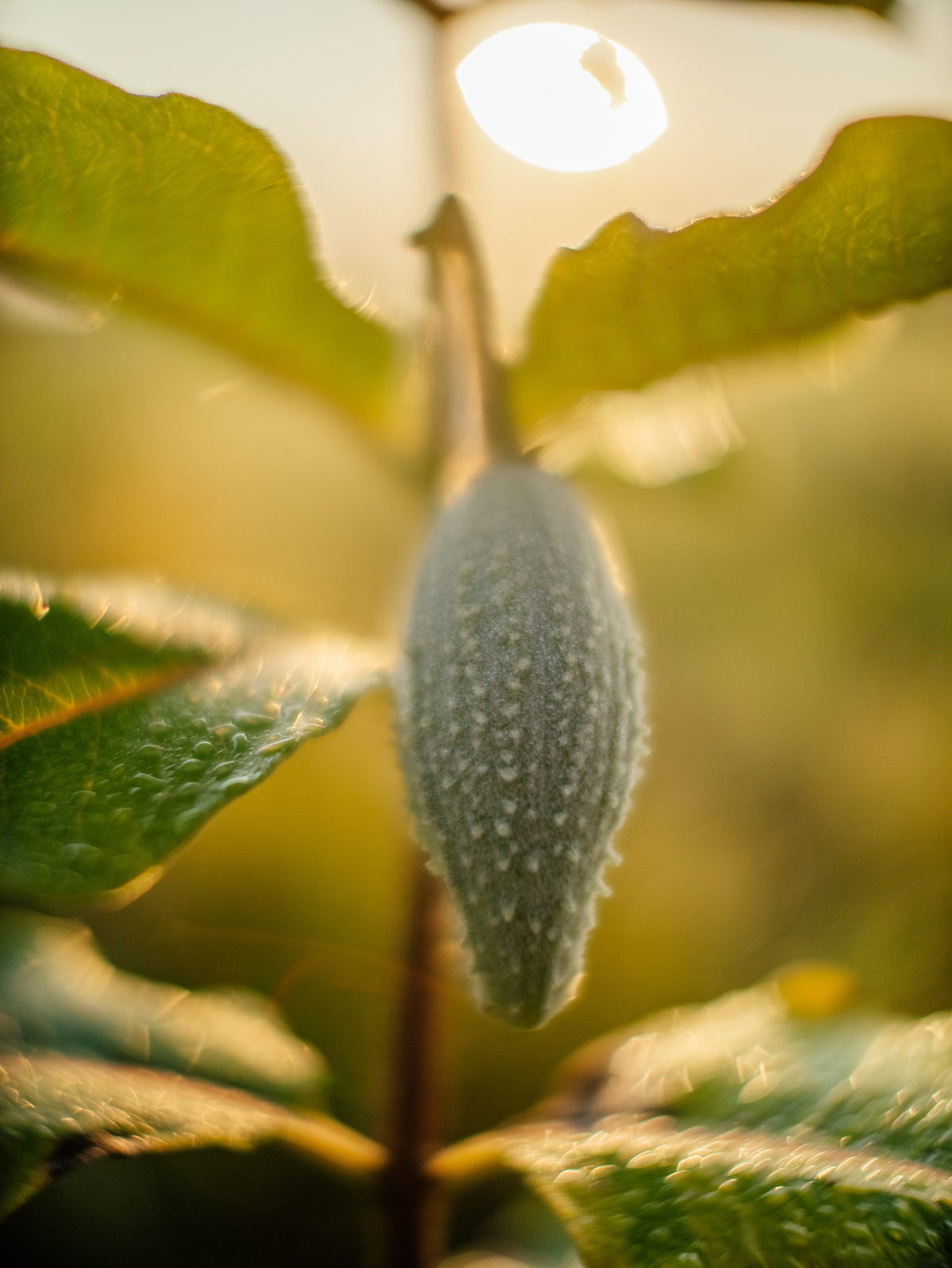
After bloom, the pollinated flowers become pods, called follicles: large green pods that ripen until September.
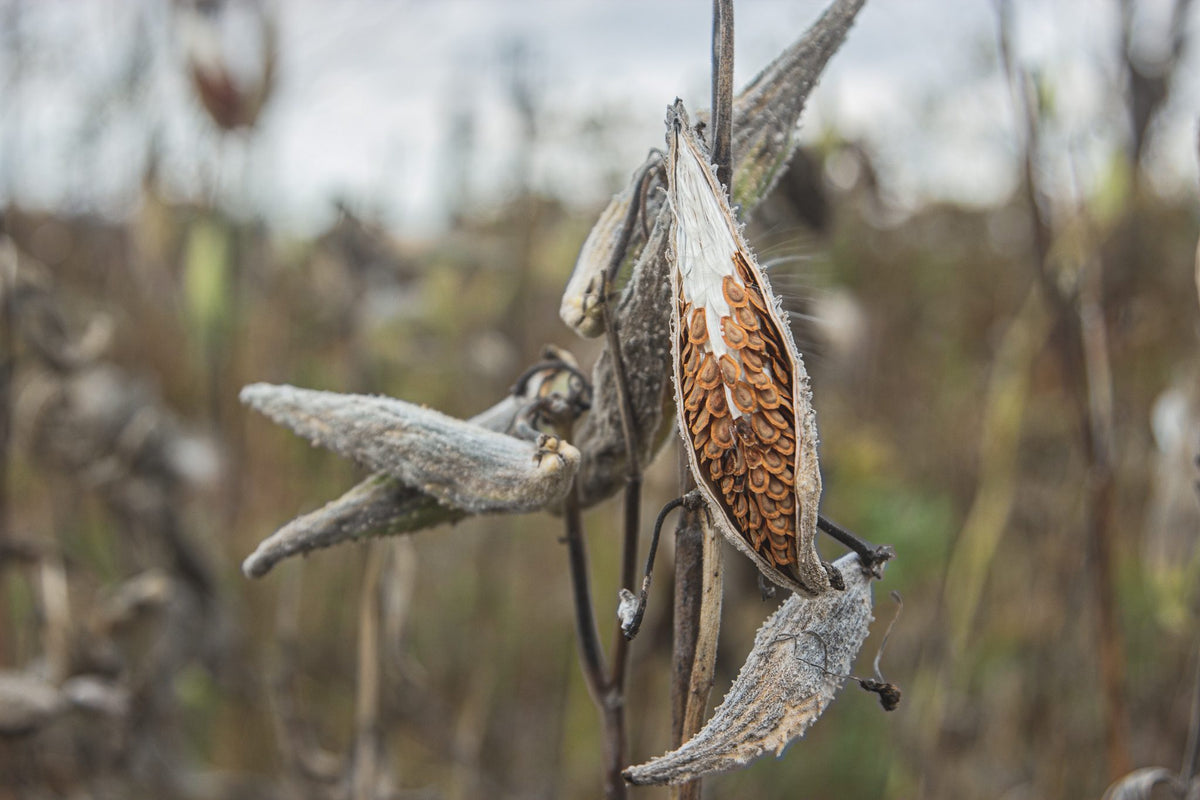
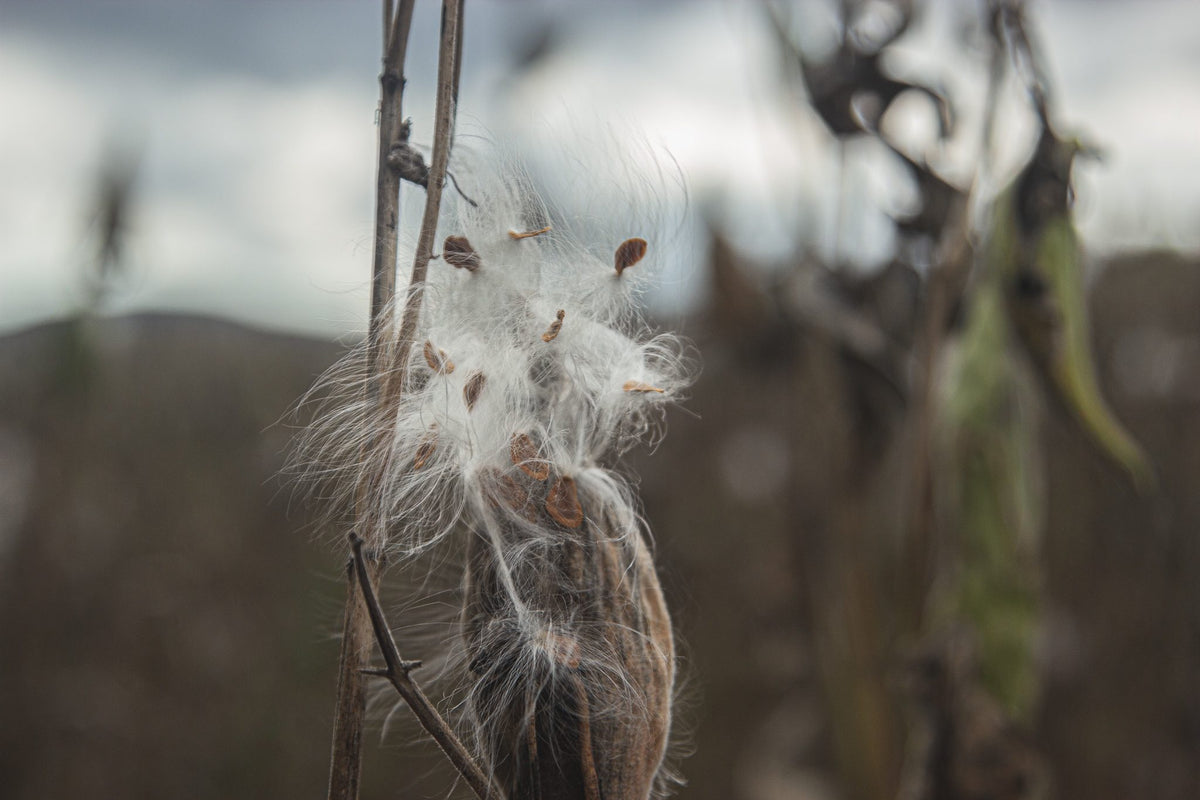
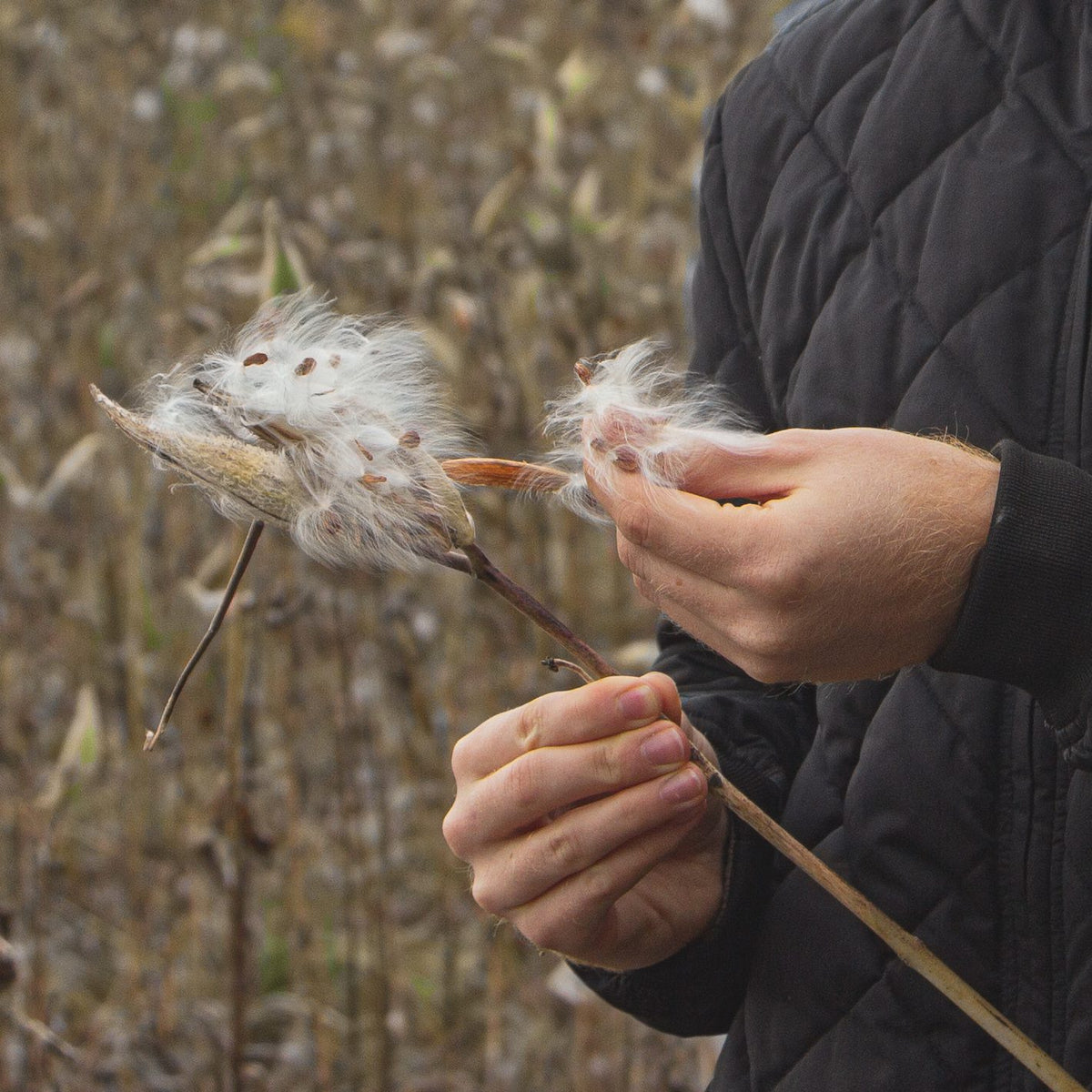
Inside each pod, more than two hundred seeds are attached to fine white silks, hollow and coated with wax. This structure traps air: it is what makes milkweed an insulator.
Harvest takes place in the fall, once bloom is over and the most important period for caterpillars has passed. Some of the seeds then come back as seeds for planting, so milkweed keeps spreading.
Milkweed doesn't stop at the edge of the field. Here's where to go next.