Planting Guide
Pour consulter le guide de plantation en français, cliquez ici
Table of contents
Milkweed seed planting guide
Seed bomb planting guide
Additional resources
Milkweed seed planting guide
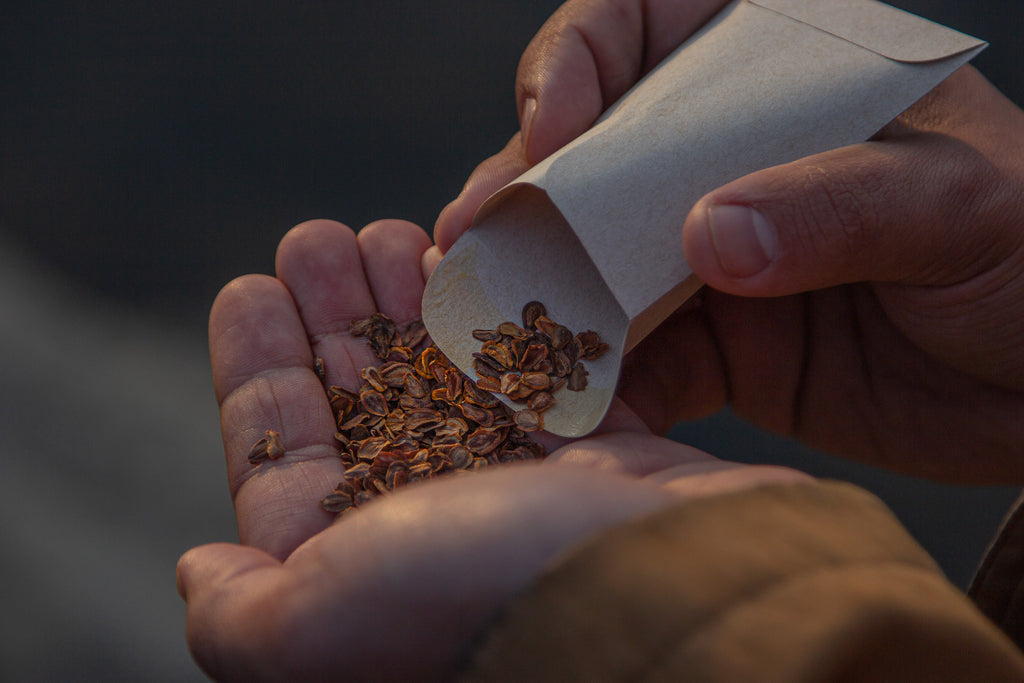
We put together a simplified guide to sum up the essentials. The method for planting milkweed seeds depends on the season. You can of course keep your seeds until the season that suits you best.
Planting in the fall (October/November)
Planting in the fall is simpler, but the germination rate may be lower.
Planting
Ideally, use well-drained, fairly light or sandy soil in a spot that gets enough sun. Keep in mind that it is important to plant before the ground freezes.

Planting in the spring (May/June)
To plant in the spring, the seeds must be stratified first.
Stratification
In a sealed plastic bag (Ziploc type), mix the seeds with damp sand or perlite. Preferably use distilled or dechlorinated water (tap water left out in the open for 24 hours) and squeeze as much air as possible out of the bag.
Place the sealed bag in the refrigerator at 5°C for at least 30 days.

Seed bomb planting guide
Planting period: May to early August
Step 1 - Planning
Find and assess the spot where you want your seed bombs to germinate. Depending on the species you chose, it is essential to pick the right location (soil, sunlight, etc.) before planting. To help, information sheets are available on the product pages for the milkweed bombs, while the native flower bombs come in themes that guide gardeners (e.g. "Wetlands" flower bombs).
Step 2 - Planting
Drop the bomb where you want it and cover it lightly with potting soil so that birds, rodents or the weather don't get to the seeds. Space them about 30 cm apart and set them no deeper than 5 mm.
We recommend not planting the bombs before May, to reduce the risk of a late overnight frost as much as possible. Depending on your region, the ideal planting period runs from May 1 to August 1. In the fall, it is better to plant untreated (non-cold-stratified) seeds directly in the ground.

Step 3 - Watering
Water lightly when planting and keep the soil moist during germination. Be careful not to soak the soil. It is important not to water every day, as this can rot the seeds and stop them from germinating. Once the plants are up, they no longer need watering: rainfall is enough for them to grow well.
In dry spells and heat waves, you can water up to twice a week as needed.
For seeds planted in pots, water once or twice a week or as needed.

Frequently asked questions
Where should I plant my seed bombs?
It depends on which type of bomb you have and the seeds it contains. All the botanical information is on our website, on the product pages for the bombs: soil type, sunlight, plant type, etc. For the milkweed bombs, since each bomb contains a single species, we were able to print basic botanical information right on the packets.
How can I improve the yield and long-term establishment of the bombs?
In terms of preparation, we have already done what is needed to encourage germination. That said, a good way to ensure the plants' long-term success is to weed a radius of at least 6 inches, ideally 12 inches, around the spot where each cell will be planted, to limit competition from other perennials.
Can unused bombs be kept for later?
Yes, by putting them back in the refrigerator as soon as you receive them. Doing so, however, carries a real risk of greatly reducing future germination. Here's why: during shipping, the bombs return to room temperature for a few days, which can signal the seeds to come out of their cold dormancy and start germinating. Putting them back in the fridge may send the seeds that hadn't germinated yet back into dormancy, but those that had started to germinate will probably die.
Is it normal for my bombs to show mould on the surface?
Additional resources
Click here to get Lasclay milkweed seeds.
Seed bombs are no longer available. The guide above is still useful if you have some left to plant.
Click here for the David Suzuki Foundation's complete guide.